Eagle Ford Disposal Wells Becoming More Common

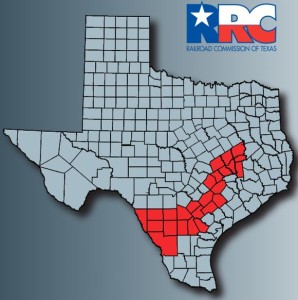
Eagle Ford Disposal Well Map

Oil & gas operators in the state of Texas are disposing of 75 times more waste water than they were in 2005. Growth in disposal volumes is the result of expanded use of hydraulic fracturing and growing water production from oil & gas wells. The state of Texas is producing more oil than it has in 20+ years. Since many of those wells produce associated water, that means more water. Production from the Eagle Ford is adding to the need for growing disposal options.

“We run about 30 to 40 trucks a day, 24-7,” Sartin said. “Depending on how the oil fracking is going out there, if they’re hustling and bustling, then we’re hustling and bustling.”

There are more than 8,000 disposal wells in the state of Texas and a little more than 10% of those are commercial operations. Add 25,000 other producing wells that accept waste fluids to improve recoveries of oil & gas and you begin to picture just how much water can be disposed of. Based on previous years, I estimate approximately 4 billion barrels of water was disposed of in 2012.

Four billion barrels sounds like a lot, but in 2010 the Texas Water Development Board estimates more than 118 billion barrels of water were used for irrigation purposes alone.

If subject of water in the Eagle Ford is new to you, read more about oil and gas water issues previous articles here:

See a full interactive map at texastribune.com

Truck Drivers - Watch Where You're Going!

Tanker Truck on the Highway

Remember maps? Those huge sheets of paper had colorful graphic representations of geographic areas and showed the locations of cities, towns, highways, streets, mountains, bodies of water and a host of other information for the traveler. Using the map scale, a driver could estimate the distance and time needed for a journey and elect to choose a route that went around a busy city or one that didn’t climb a steep mountain range. (The one thing that few drivers couldn’t do with a map was get it refolded to its original convenient glove-box size.)

Truckers’ maps went beyond common road atlases by including additional job-specific details such as the locations of weigh stations, low overhead clearances and non-truck routes. (Plus they came bound in book form--no refolding needed!)

Truck Driving Maps Go Electronic

[ic-l]Increasingly, drivers are getting guidance not from paper maps but from electronic devices. Global positioning systems (GPS) use satellites to tell drivers where they are, where they are going and what lies ahead.

The Federal Motor Carrier Safety Administration (FMCSA) wants commercial vehicle drivers to realize that not all navigation systems are the same. Just as truckers’ maps differed from common road atlases, so do GPS systems.

“A typical system that a consumer might buy at an electronics or auto parts store may not have software programming to show low bridges, hazmat routes and other information relevant to commercial motor vehicle operators.”

Paying attention to warnings can spare you a hefty fine for pulling your 30-ton tanker down a road restricted to a weight one third of that.

The FMCSA believes it is critical for truck and bus drivers to use the right navigation system when operating a commercial motor vehicle. If you use a navigation system that does not provide important route restrictions such as low bridge overpasses the shortcut you thought would save you time and fuel may end up more expensive than you had anticipated. A wrong turn or unnecessary mile can cost you time, money and patience.

Commercial Motor Vehicle navigation systems differ because they:

  • Take into account road widths which can affect speed limits
  • Report road, weather and traffic conditions that could cause delays
  • Alert drivers to elevations that can make driving a challenge

The FMCSA has created a visor card specifically for truck and bus drivers on how to choose the right navigation system intended for them. The visor card gives tips for safe use of navigation systems. It’s pictured here and you can also download it free-of-charge from http://www.fmcsa.dot.gov/about/outreach/education/GPS_Visor_Card_508.pdf. The visor card provides tips on selecting the proper navigation system designed for trucks and buses.

A navigation system has to be used properly to give good results. The information you get out of it is only as good as the information you put in it. The FMCSA visor card shows how to input data. For example, in order for the system to provide you with the appropriate route, you should enter all relevant information such as:

  • Vehicle's length, width and height;
  • Axle weight; and
  • Any hazardous materials being hauled.

Drive Smarter, Be Safer

Give yourself every advantage by selecting a route that doesn’t throw avoidable obstacles in your path. Follow the recommended route and obey traffic, clearance and warning signs.

And it goes without saying: don’t drive while using a cell phone or texting. By planning your route and paying attention to your driving you can have a safe and efficient run.

Kinder Morgan Plans Second Condensate Facility at Galena Park

Kinder Morgan Galena Park Terminal Photo

Kinder Morgan has reached an expanded agreement with BP that will support the development of an additional 50,000 b/d condensate processing facility at Galena Park.

Kinder Morgan will invest an additional $170 million to add a second processing unit and add 700,000 barrels of storage at the site along the Houston Ship Channel. Total condensate processing capacity at the site will increase to 100,000 b/d.

“We are pleased to secure long-term contracts for all of the throughput capacity at our facility, and provide BP with the processing needed for Eagle Ford Shale production and other condensates,” said KMP Products Pipelines President Ron McClain. “Combined with our recently completed Kinder Morgan Crude Condensate (KMCC) pipeline, we are able to provide unparalleled connectivity to crude oil and clean products markets on the Texas Gulf Coast.”

“As production continues to grow, this might not be the last condensate processing facility we see announced. ”

Condensate processing facilities split the liquid into its various components - light and heavy naptha, kerosene, diesel, and gas oil. The individual components are more easily marketed.

As of the first quarter of 2013, the Eagle Ford is estimated to be producing more than 800,000 b/d of liquids, but only a little more than 400,000 b/d is considered oil. The remaining balance is attributable to condensates and NGLs. The amount of condensate production varies by well across the play, but as much as 50% of liquids production is potentially viewed as condensate by midstream companies.

Paul Reed, Chief Executive of BP’s integrated supply and trading business, said, “BP is proud to build upon our strategic partnership with Kinder Morgan through an increased footprint in Galena Park. We believe that by accessing this additional throughput capacity we will be better placed to provide U.S. producers a full suite of services including access to the best homes for their crude and condensates. It will also enable BP to service our customers better and more efficiently manage their feedstock and product needs. BP remains committed to helping unlock additional U.S. domestic energy production.”

This announcement comes in addition to the company's previous commitment to build a $200 million processing facility at Galena Park. BP committed to supply 40,000 b/d of condensate and agreed to a long-term lease of 750,000 barrels of storage at the facility in the summer of 2012. You can read more in the article BP - Kinder Morgan Ink Long-Term Eagle Ford Processing Agreement. The first phase is expected to be in service by the first quarter of 2014.

Read the latest press release at kindermorgan.com

Eagle Ford Shale Task Force Report

View the Report
View the Report

The Eagle Ford Task Force met throughout 2011 and 2012 to address concerns and challenges that accompany the growing economy across South Texas.

The group compiled its findings in a report published by the Texas Railroad Commission. The report was overshadowed by UTSA's Updated Eagle Ford Study not long after its release, but there is still a wealth of information to take away.Major takeaways include:

  • Energy companies must explore previously untapped recruitment resources to meet immediate labor needs
  • TX RRC wants to speed up the determination that pipelines will be of "public use" to allow for quicker decisions in development
  • RRC records do not include a single documented groundwater contamination case associated with hydraulic fracturing
  • RRC is in the process of updating rules related to injection & disposal wells, well integrity, wellhead control, waste management, and water recycling
  • Texas oil production may push the US ahead of Saudi Arabia and Russia in 2020
  • Natural gas flaring in oil fields is being scrutinized at the regulatory level
  • Health care and expanded educational offerings are needed to equip workers of the future

If you have an interest in any of the topics above, you can read the full report at rrc.state.tx.us

New Oil & Gas Water Recycling Rules - TX RRC

The Railroad Commission has adopted new rules to encourage Texas operators to continue their efforts at conserving water used in the hydraulic fracturing process for oil and gas wells. They have essentially relaxed rules to make it easier for operators to recycle water onsite. Major changes adopted to the Commission’s water recycling rules include eliminating the need for a recycling permit if operators are recycling fluid on their own leases or transferring their fluids to another operator’s lease for recycling. The changes adopted by the Commission today also clearly identify recycling permit application requirements and reflect existing standard field conditions for recycling permits.

“By removing regulatory hurdles, these new amendments will help foster the recycling efforts by oil and gas operators who continue to examine ways to reduce freshwater use when hydraulically fracturing well.”
— Chairman Barry Smitherman

Commissioner David Porter said, “Water use has been a major concern examined by my Eagle Ford Shale Task Force, and I commend our staff for working to streamline our rules to encourage more recycling.”

Commissioner Christi Craddick said, “Just as our operators have used technology to bring us into this modern day boom of oil production, they are also using technology to reduce their fresh water use. The changes adopted today will assist in those efforts.”

Water shortages in Texas in the past 5 years has brought the spotlight on new oil and gas production methods, in particular hydraulic fracturing. Even though this technique is reported to only use about 1% of water usage in the state, it is an important resource that industries are compelled to manage properly for a more responsible energy future. In doing so, a new ruling by the Texas Railroad Commission removes the regulatory hurdle from recycling frac water– bringing big promise to the future of water recycling in the region. "We see this change as an opportunity to accelerate deployment of our water recycling technologies in Texas.", said Peter Pappas, VP at Bosque Systems.

The rule amendment also establishes five categories of commercial recycling permits to reflect industry practices in the field:

  • On-lease Commercial Solid Oil and Gas Waste Recycling
  • Off-lease or Centralized Commercial Solid Oil and Gas Waste Recycling
  • Stationary Commercial Solid Oil and Gas Waste Recycling
  • Off-lease Commercial Recycling of Fluid
  • Stationary Commercial Recycling of Fluid

The changes to the rule also establish a tiered approach for the reuse of treated fluid, including both authorized reuse of treated fluids in oil and gas operations and provisions for reusing the fluid for other non-oilfield related uses.