Marathon Oil Sells Norwegian Business to Focus on U.S. Assets

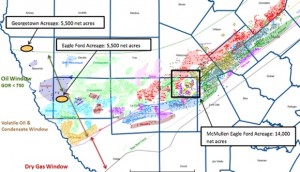
Marathon Oil Eagle Ford Acreage

Houston-based Marathon Oil Corporation announced in June of 2014 that it is selling its Norway business for $2.7 billion to re-focus capital investments in the Eagle Ford Shale and other U.S. domestic assets.

The buyer, Norwegian-based Det Norske Oljeselskap ASA, will take on ~700-million of Marathon's debt from the deal, leaving Marathon with approximately $2.1 billion in proceeds at closing.

According to Marathon CEO Lee M. Tillman, the company is focused on simplifying and concentrating its business, with a primary focus on its U.S. resource plays, including the Eagle Ford. This divestiture is one of several deals Marathon has made in the past few years. Since 2011, the company has divested $6.2 billion in assets.

“Marathon Oil has a deep inventory across three high-quality U.S. resource plays with expanding opportunities to further accelerate activity. Such organic growth will be our first priority for additional capital allocation.”
— Lee M. Tillman

Currently, Marathon has 211,000 net Eagle Ford acres. During the first-quarter of 2014, the company averaged 96,000 net boe/d, which was an increase of 7% over the previous quarter.

Read more at MarathonOil.com

Eagle Ford Shale Rig Count Increases by Seven to 269

Sundance Energy's Eagle Ford Acreage

The Eagle Ford Shale rig count increased by seven to 269 rigs running across our coverage area by the end of last week.

In recent Eagle Ford news, Australian-based Sundance Energy announced the acquisition of 11,000 net acres in Dimmit and Maverick counties for $33-million and a four gross Eagle Ford well drilling commitment to the seller. The deal adds 115 gross (69 net) locations to the company’s Eagle Ford drilling inventory and approximately 200 boe/d in production. Sundance now has approximately 19,500 net Eagle Ford acres covering 295 gross (196 net) drilling locations.

Read more: Sundance Energy Acquires 11,000 Net Eagle Ford Acres for $33-Million

The U.S. rig count increased by nine to 1,866 rigs running by the end of last week. A total of 326 rigs were targeting natural gas (one more than the previous week) and 1,536 were targeting oil in the U.S. (eight more than the previous week). The remainder were drilling service wells (e.g. disposal wells, injection wells, etc.). 894or ~48% of rigs active in the U.S. were running in Texas.

Baker Hughes rig count is quoted here. Baker Hughes also releases its own Eagle Ford Rig Count that covers the 14 core counties (213 rigs). The rig count published on EagleFordShale.com includes a 30 county area impacted by Eagle Ford development. A full list of the counties included can be found in the table near the bottom of this article.

Eagle Ford Oil & Gas Rigs

The natural gas rig count decreased by two to 11 rigs running by the end of last week. Average rig counts for natural gas production in 2012 were around 82 and then dropped to around 41 in 2013. Natural gas prices stayed relatively flat from the previous week at $4.56/mmbtu on Friday afternoon.

The oil rig count increased by nine to 258 rigs running by the end of last week. WTI oil prices decreased by ~$2, trading at $102.79/bbl on Friday afternoon. Eagle Ford light crude traded at $100.00/bbl on May 29th.

A total of 241 rigs are drilling horizontal wells, 13 rigs are drilling directional wells, and 15 rigs are drilling vertical wells. Karnes, La Salle, De Witt, and Webb counties each have at minimum 25 rigs running. Karnes County has the highest rig count this week at 34. See the full list below in the Eagle Ford Shale Drilling by County below

South Texas Oil & Gas News:

Be sure to visit our South Texas Oilfield Job Listings to search openings and come back weekly for updates.

Eagle Ford Shale Drilling by County

What is the Rig Count?

The Eagle Ford Shale Rig Count is an index of the total number of oil & gas drilling rigs running across a 30 county area in South Texas. The South Texas rigs referred to in this article are for ALL drilling reported by Baker Hughes and not solely wells targeting the Eagle Ford formation. All land rigs and onshore rig data shown here are based upon industry estimates provided by the Baker Hughes Rig Count and/or Smith Service Co's (Schlumberger) Smith Rig Count.

Texas Injection Wells Garner Increased Scrutiny

Injection Well
Injection Well

Injection wells* in the state of Texas are garnering increased scrutiny. In the past year, these wells have been linked to earthquakes, and now the state's water districts are taking a closer look at the potential impacts of injection wells on groundwater.

Read more: Earthquakes Linked to Disposal and Injection Wells - Video

The Gonzales County Underground Water Conservation District (GCUWCD) recently lost its fight with Marathon Oil Corporation over the company's plan to install an injection well in the Eagle Ford. In late May of 2014, at a Texas Railroad Commission (RRC) hearing, commissioners rejected the districts attempt to protest the permit, and gave Marathon the go-ahead to proceed with the injection well. The RRC's ruling was in response to an appeal by Marathon, after an agency hearing examiner's decision allowed the GCUWCD to protest the permit. The commissioners claimed the unanimous decision to dismiss the protest was based on the location of the well being outside the water district's area.

The GCUWCD remains concerned the injection well could potentially contaminate the underlying Carrizo-Wilcox aquifer. After the Railroad Commission made the decision to grant the permit, environmentalist groups sounded off.

“This was a terrible decision by the Railroad Commission. Disposal of fracking waste poses serious risks to water quality and water districts should absolutely be allowed to participate in the permitting process. The Railroad Commission has a terrible track record of watchdogging the oil and gas industry and holding them accountable. Groundwater districts should have the right to scrutinize proposals to dump waste near drinking water supplies and demand strong safety standards. The Railroad Commission has become a runaway train, running down citizens rights, public health and the environment.”
— Luke Metzger, with Environment Texas

At the hearing, a Marathon representative said the company was a committed "environmental steward", and stressed the importance of consistent and clear regulation of disposal wells. The Texas Railroad Commission has the explicit authority in the state of Texas to grant or deny drilling permits.

Tell us what you think about this decision. Did the RRC make the right move, or should the GCUWCD have been allowed to protest the permit?

Injection wells - generally a waste water disposal well, in which treated waste water is injected into the ground

Titanium Exploration Partners and Castlelake Form Joint Venture - Press Release

Dallas and Minneapolis – May 29, 2014 – Titanium Exploration Partners, LLC (TEP) and Castlelake, L.P., a global institutional alternative investment firm, today announced the formation of a joint venture to pursue investments in non-operated oil and gas assets in unconventional resource plays in the United States. The joint venture will make investments via acquisitions from sellers of non-operated working interests, strategic partnerships with operators and organic leasing. The joint venture will initially focus on the Eagle Ford Shale and may expand to other opportunities over time.

“This joint venture combines the expertise of Titanium Exploration Partners with the resources of Castlelake and the capital they manage,” said Chip Simmons, CEO of Titanium. “Having a strong capital partner like Castlelake will allow us to expedite the investment and acquisition process for the benefit of our operating partners, sellers of non-operated working interests and landowners.”

TEP will act as asset manager in the joint venture, responsible for sourcing opportunities, negotiating and structuring the investments, and managing acquired assets. Through its funds, Castlelake will provide capital together with its expertise in the energy industry. The firm will also guide sourcing, as well as provide strategic and economic direction for the joint venture.

“The joint venture brings together Titanium’s specialized expertise and our unique approach to investing in illiquid assets where long-term capital is of significant value,” said Luke Beltnick, Managing Director of Castlelake. “As development in the Eagle Ford Shale grows, so too does the need for capital to facilitate these transactions, and Castlelake is in a unique position to meet the needs of all parties involved.”

Castlelake has invested more than $600 million in the energy industry. Formed in 2005, the global institutional alternative investment firm has $3.6 billion in assets under management and focuses on deep value, asset rich opportunities across capital structures, industries, and geographies.

About Titanium Exploration Partners

Titanium
Titanium

Titanium Exploration Partners is a Dallas-based investment firm focused on the acquisition and development of non-operated oil and gas assets in leading unconventional resource plays across the United States. Titanium is building a diverse portfolio of assets through partnerships with established operators, acquisitions of non-operated working interests and royalty interests and leasing. Titanium is currently focused on the Eagle Ford Shale, while also considering investments in other top unconventional resource plays, including the Bakken, Marcellus, Utica and Niobrara formations, and the Permian Basin. Titanium was founded by Chip Simmons, CEO; Peter Halloran, Managing Director; and Brennan Potts, Managing Director.

About Castlelake, L.P.

CastleLake
CastleLake

Castlelake, L.P. is a global institutional alternative investment firm focused on deep value, asset rich opportunities. Castlelake today has $3.6 billion of assets under management. Castlelake has more than 60 professionals based in its Minneapolis, Minnesota and London offices. For more information please visit www.castlelake.com or contact Castlelake at (612) 851-3150. 

Contacts: Titanium Exploration Partners Brennan Potts, Managing Director, 214-549-3652 [email protected]

Castlelake, L.P. Peter H. Glerum, 612-851-3100 [email protected]

Tom Laughran, 312-729-3719 [email protected]

Sun Resources Acquires 5,014 Net Eagle Ford Acres

Ursa Acreage Map
Ursa Acreage Map

Australian-based Sun Resources announced in late May of 2014 that it is buying a 50% non-operated working interest in 10,028 gross (5,014 net) Eagle Ford acres in Bastrop County's Badger Oil Project area. Company officials said the acreage was acquired from the project's operator, Houston-based Ursa New Ventures LLC, who will retain a 50% working interest in the acreage. The companies did not disclose the purchase price, but Sun said in a company statement that it will use existing cash to fund the transaction.

This acquisition comes on the heels of another Australian-based company, Sundance Energy, announcing this week a $33-million deal to acquire 11,000 net Eagle Ford acres in Dimmit and Maverick counties. That deal increased Sundance's acreage position in the play to 19,500 net Eagle Ford acres covering 295 gross (196 net) drilling locations.

Read more: Sundance Energy Acquires 11,000 Net Eagle Ford Acres for $33-Million

Sun and Ursa Development Plans

The Badger Oil Project area is located offset to the Giddings oil field, a prolific Austin Chalk oil field, that has produced over 1-billion bbls of oil. Sun and Ursa are planning to spud the first horizontal test well before the end of November 2014, prospective for the Eagle Ford and the Austin Chalk formations, to determine the commercial oil potential. The first well in the Badger Oil Project is projected to be a 5,500 foot lateral drilled within the Eagle Ford section.

Read more at sunres.com.au