
Eagle Ford Shale Rig Count Decreases by Four to 276

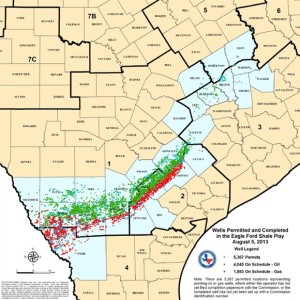
Eagle Ford Shale Well Map

The Eagle Ford Shale rig count decreased by four to 272 rigs running across our coverage area by the end of last week.

In recent Eagle Ford news, lower commodities prices for crude oil aren’t likely to stop new drilling in the Eagle Ford. With breakeven oil prices between $50 – $60 per barrel, in certain liquids-rich areas of the play, operators will continue to drill, even if prices inch closer to this range.

Should prices drop to $70 per barrel, experts believe the Eagle Ford will likely experience a slowdown, but not an all out bust. And some producers will fare better than others, depending on their position.

Read more: Worried About Oil Prices? Here's What to Expect in the Eagle Ford

The U.S. rig count decreased by four to 1,925 rigs running by the end of last week. A total of 356 rigs were targeting natural gas (ten more than the previous week) and 1,568 were targeting oil in the U.S. (14 less than the previous week). The remainder were drilling service wells (e.g. disposal wells, injection wells, etc.). 906 or ~48% of rigs active in the U.S. were running in Texas.

Baker Hughes rig count is quoted here. Baker Hughes also releases its own Eagle Ford Rig Count that covers the 14 core counties (212 rigs). The rig count published on EagleFordShale.com includes a 30 county area impacted by Eagle Ford development. A full list of the counties included can be found in the table near the bottom of this article.

Eagle Ford Oil & Gas Rigs

The natural gas rig count increased by three to 20 rigs running by the end of last week. Average rig counts for natural gas production in 2012 were around 80 and then dropped to around 40 in 2013. Natural gas prices rose by $.58 from the previous week to $4.46/mmbtu on Friday afternoon.

The oil rig count decreased by seven to 252 rigs running by the end of last week. WTI oil prices decreased by ~$1.50 from the previous week, trading at $78.95/bbl on Friday afternoon. Eagle Ford light crude traded at $74.25/bbl on Nov. 6th.

A total of 252 rigs are drilling horizontal wells, 13 rigs are drilling directional wells, and 7 rigs are drilling vertical wells. Karnes, La Salle, Dimmit, and DeWitt each have at minimum 25 rigs running. Dimmit County has the highest rig count this week at 39. See the full list below in the Eagle Ford Shale Drilling by County below

South Texas Oil & Gas News:

Be sure to visit our South Texas Oilfield Job Listings to search openings and come back weekly for updates.

Eagle Ford Shale Drilling by County

What is the Rig Count?

The Eagle Ford Shale Rig Count is an index of the total number of oil & gas drilling rigs running across a 30 county area in South Texas. The South Texas rigs referred to in this article are for ALL drilling reported by Baker Hughes and not solely wells targeting the Eagle Ford formation. All land rigs and onshore rig data shown here are based upon industry estimates provided by the Baker Hughes Rig Count.

Eagle Ford Ghost Town Coming Back to Life

Helena, TX Map
Helena, TX Map

Texas is full of ghost towns, but the Eagle Ford Shale, is breathing life back into one of them in the heart of the play.

Recently, the San Antonio Express News published an interesting story about the tiny ghost town of Helena, TX, in Karnes County. The Karnes Trough area, which is generally considered the best area of the play in the oil window, has resulted in Karnes County consistently having the highest weekly rig count compared to all other Eagle Ford Shale Counties for the past year. Currently, there are 35 active rigs in the area. The result of all that drilling – money, and lots of it, in the form of royalty checks, taxes, etc., directly injected into Karnes County.

Eagle Ford Ghost Town – Helena, TX

Helena, TX, which is about 70 miles southeast of San Antonio, had a colorful past, and was once known as the self-proclaimed “toughest town on earth.” Prior to the boom, the town’s buildings had largely fallen into disrepair, but that all changed with the Eagle Ford Shale. According to the paper, the Karnes County Historical Society owns 16 acres in Helena, all leased to Marathon Oil, and intends to use royalty monies to continue much needed repairs to buildings. The stone courthouse, now a museum, has received funding from long-time Karnes County ranching families, who have benefited from oil wealth, paying for restoration work.

Ultimately, Helena, TX, is an interesting litmus test of the areas newly found wealth. Can you imagine living in an area where ghost towns start coming back to life? At least for now, those living in Karnes County, TX, are seeing it happen, and it’s thanks to the Eagle Ford Shale.

Worried About Oil Prices? What to Expect in the Eagle Ford

Eagle Ford Contour Map

There’s been a lot of talk about the price of oil lately. With WTI now below $80, we’re seeing the first shoes begin to drop among in North American oilfields, as some producers announce plans to scale back their drilling programs.

Just this week, Conoco Phillips, announced it would be cutting back drilling in West Texas's Permian Basin, and last month, Eagle Ford-focused Clayton Williams indicated it may scale back its drilling program in the play by the first of the year.

Read more:Clayton Williams May Reduce Eagle Ford Drilling Program

However, lower commodities prices for crude oil aren’t likely to stop new drilling in the Eagle Ford. With breakeven oil prices between $50 – $60 per barrel, in certain liquids-rich areas of the play, operators will continue to drill, even if prices inch closer to this range.

Read more: What is the Breakeven Oil Price in the Eagle Ford?

Eagle Ford Slow Down

Should prices drop to $70 per barrel, experts believe the Eagle Ford will likely experience a slowdown, but not an all out bust. And some producers will fare better than others, depending on their position.

According to the consultancy Wood Mackenzie, the Eagle Ford is still expected to reach two-million b/d of crude and condensate production by 2020. Analysts predict the Karnes Trough, one of the best areas of the play, would be profitable, even if the price of oil fell into the $40s range.

Eagle Ford Shale Rig Count Increases by 1 to 276

Carrizo Eagle Ford Acreage Map

The Eagle Ford Shale rig count increased by one to 276 rigs running across our coverage area by the end of last week.

In recent Eagle Ford news, Houston-based Carrizo Oil & Gas, Inc., has closed its $250-million Eagle Ford acquisition of 6,820 net Eagle Ford acres from Eagle Ford Minerals, LLC, for $250-million. The deal represents a ~25% working interest in the acquired properties, where Carrizo was already the operator. At closing, Carrizo assumed 100% of the working interest in the assets.

Read more: Carrizo Acquires Eagle Ford Working Interest

The U.S. rig count increased by two to 1,929 rigs running by the end of last week. A total of 346 rigs were targeting natural gas (fourteen more than the previous week) and 1,582 were targeting oil in the U.S. (13 less than the previous week). The remainder were drilling service wells (e.g. disposal wells, injection wells, etc.). 901 or ~48% of rigs active in the U.S. were running in Texas.

Baker Hughes rig count is quoted here. Baker Hughes also releases its own Eagle Ford Rig Count that covers the 14 core counties (218 rigs). The rig count published on EagleFordShale.com includes a 30 county area impacted by Eagle Ford development. A full list of the counties included can be found in the table near the bottom of this article.

Eagle Ford Oil & Gas Rigs

The natural gas rig count increased by one to 17 rigs running by the end of last week. Average rig counts for natural gas production in 2012 were around 80 and then dropped to around 40 in 2013. Natural gas prices increased by $.27 from the previous week to $3.88/mmbtu on Friday afternoon.

The oil rig count stayed flat at 259 rigs running by the end of last week. WTI oil prices decreased by ~$.60 from the previous week, trading at $80.58/bbl on Friday afternoon. Eagle Ford light crude traded at $77.50/bbl on Oct. 30th.

A total of 251 rigs are drilling horizontal wells, 15 rigs are drilling directional wells, and 10 rigs are drilling vertical wells. Karnes, La Salle, Dimmit, and McMullen each have at minimum 27 rigs running. Dimmit County has the highest rig count this week at 37. See the full list below in the Eagle Ford Shale Drilling by County below

South Texas Oil & Gas News:

Be sure to visit our South Texas Oilfield Job Listings to search openings and come back weekly for updates.

Eagle Ford Shale Drilling by County

What is the Rig Count?

The Eagle Ford Shale Rig Count is an index of the total number of oil & gas drilling rigs running across a 30 county area in South Texas. The South Texas rigs referred to in this article are for ALL drilling reported by Baker Hughes and not solely wells targeting the Eagle Ford formation. All land rigs and onshore rig data shown here are based upon industry estimates provided by the Baker Hughes Rig Count.

RRC Approves New Disposal Well Rule Amendments

Eagle Ford Disposal Well Map

Beginning on November 17, 2014, new rules will go into effect for disposal wells in Texas. In late October of this year, the three Texas Railroad Commissioners (RRC) unanimously adopted disposal well rule amendments designed to address disposal well operations in areas of historical or future seismic activity.

Disposal wells are permitted by the RRC to dispose of produced water and flowback fluids, resulting from the hydraulic fracturing of a well. After a rash of low-magnitude earthquakes in Texas, purportedly linked to oil and gas development and disposal wells, the RRC hired seismologist Dr. David Pearson in March of 2014, for the purpose of researching the cause of the Texas tremors. In August of this year, Pearson proposed four new rules to a House subcommittee concerning disposal wells, and the new rule amendments are for all intents and purposes the formalized adoption of his proposals.

Read more: Could New Wastewater Disposal Rules Be Coming in Texas?

“I would like to commend our staff for drafting and amending these rules so quickly. These comprehensive rule amendments will allow us to further examine seismic activity in Texas and gain an understanding of how human activity may impact seismic activity, while continuing to allow for the important development of our energy resources in Texas.”
— RRC Commissioner, David Porter

Main Components of Newly Adopted Rule Amendments for Disposal Wells in Texas

  • Requires applicants for new disposal wells to conduct a search of the U.S. Geological Survey seismic database for historical earthquakes within a circular area of 100 square miles around a proposed, new disposal well;
  • Clarifies the RRC's staff authority to modify or suspend or terminate a disposal well permit, including modifying disposal volumes and pressures or shutting in a well if scientific data indicates a disposal well is likely to be or determined to be contributing to seismic activity;
  • Allows RRC staff to require operators to disclose the current annually reported volumes and pressures on a more frequent basis if staff determines a need for this information; and
  • Allows RRC staff to require an applicant for a disposal well permit to provide additional information, including pressure front boundary calculations, to demonstrate that disposal fluids will remain confined if the well is to be located in an area where conditions exist that may increase the risk that the fluids may not be confined.