Warwick Energy Closes Deal for 7,300 Net Eagle Ford Acres

ConocoPhillips Eagle Ford Map

Oklahoma-based Warwick Energy announced in June of 2014 that the company closed its purchase of R/C Sugarkane LLC, an Eagle Ford upstream oil and gas company, last month.

At closing, Warwick Energy gained R/C Sugarkane's 7,300 net Eagle Ford acres, with current production of ~1,200 net boe/d in Live Oak, Atascosa and Karnes counties. The deal also included R/C Sugarkane's gathering and other related midstream infrastructure in the play. In April of 2014, Warwick announced it agreed to purchase R/C Sugarkane from affiliates of a New York-based private equity firm, Riverstone Holdings LLC, for an undisclosed amount.

Read more: Warwick Energy Buys Eagle Ford's R/C Sugarkane for Undisclosed Amount

According to Warwick officials, the operators of the acquired acreage are ConocoPhillips, Marathon and BHP Billiton. Warwick officials say they are encouraged by downspacing results and optimizations being achieved by these operators.

“The Eagle Ford Shale is a world class, liquids-rich resource play and through this acquisition we have acquired a multi-year drilling inventory that is both substantially de-risked and held by production.”
— Warwick CEO, Katherine Richard

Warwick was founded in 2010, and manages non-operated oil and gas interests across the country, with interests in over 5,000 wells in 13 states. The R/C Sugarkane acquisition will be funded by ArcLight Capital Partners affiliated equity investors.

Read more at warwick-energy.com

Eagle Ford Shale Rig Count Decreases by Three to 268

EIA Dry Shale Gas Production

The Eagle Ford Shale rig count decreased by three to 268 rigs running across our coverage area by the end of last week.

In recent Eagle Ford news, natural gas production in the U.S. was the best it’s ever been in April of 2014 according to estimates from Bentek Energy, an energy market analytics company based in Denver, CO. In 2014, Bentek predicts that average U.S. production for natural gas will be 67.5 Bcf/d, due in part to a higher overall price environment for producers and continued growth in liquids-rich plays like the Eagle Ford Shale and dry gas plays like the Marcellus Shale.

Read more: Natural Gas Production Soars in U.S.

The U.S. rig count decreased by six to 1,854 rigs running by the end of last week. A total of 310 rigs were targeting natural gas (ten less than the previous week) and 1,542 were targeting oil in the U.S. (four more than the previous week). The remainder were drilling service wells (e.g. disposal wells, injection wells, etc.). 888or ~48% of rigs active in the U.S. were running in Texas.

Baker Hughes rig count is quoted here. Baker Hughes also releases its own Eagle Ford Rig Count that covers the 14 core counties (213 rigs). The rig count published on EagleFordShale.com includes a 30 county area impacted by Eagle Ford development. A full list of the counties included can be found in the table near the bottom of this article.

Eagle Ford Oil & Gas Rigs

The natural gas rig count decreased by two to 13 rigs running by the end of last week. Average rig counts for natural gas production in 2012 were around 82 and then dropped to around 41 in 2013. Natural gas prices stayed relatively flat from the previous week at $4.74/mmbtu on Friday afternoon.

The oil rig count decreased by one to 255 rigs running by the end of last week. WTI oil prices increased by ~$4 from the previous week, trading at $106.91/bbl on Friday afternoon. Eagle Ford light crude traded at $103.25/bbl on June 6th.

A total of 237 rigs are drilling horizontal wells, 14 rigs are drilling directional wells, and 17 rigs are drilling vertical wells. Karnes, La Salle, De Witt, and McMullen counties each have at minimum 25 rigs running. De Witt County has the highest rig count this week at 33. See the full list below in the Eagle Ford Shale Drilling by County below

South Texas Oil & Gas News:

Be sure to visit our South Texas Oilfield Job Listings to search openings and come back weekly for updates.

Eagle Ford Shale Drilling by County

What is the Rig Count?

The Eagle Ford Shale Rig Count is an index of the total number of oil & gas drilling rigs running across a 30 county area in South Texas. The South Texas rigs referred to in this article are for ALL drilling reported by Baker Hughes and not solely wells targeting the Eagle Ford formation. All land rigs and onshore rig data shown here are based upon industry estimates provided by the Baker Hughes Rig Count and/or Smith Service Co's (Schlumberger) Smith Rig Count.

Number of Oil & Gas Jobs Continue to Rise in Texas

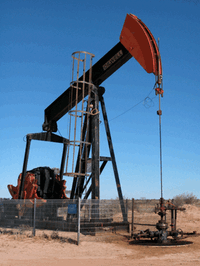
Pump Jack Image
Pump Jack Image

The Eagle Ford Shale boom is attracting workers in South Texas, and with the price of oil currently hovering around $100 per barrel, growth is expected to continue into the immediate future. In March of 2014, the Texas Workforce Commission (TWC) said 3,200 oil and gas related jobs were added in January, for a total of 15,800 jobs over the year and an annual growth rate of 5.6%.

With statistics like those, many folks are seeking Eagle Ford jobs to fulfill their dream of a better life, support a family, or simply make a career change, but working in the South Texas oil patch can be challenging. Since the boom began, the landscape of South Texas has changed - housing shortages, overcrowded schools, and increased traffic have become the new reality for many parts of South Texas.

South Texas Housing Options

This isn't the first oil boom the U.S. has ever experienced. As a child, I recall my grandmother telling stories about living in tent cities, as her father worked the rigs across the country during the 1930s. Today, in South Texas, there are a number of lodging options, but where oilfield workers ultimately find a place mostly depends on availability and budget.

As a result of traditional housing shortages, many south Texas oilfield workers have chosen RVs as a temporary form of housing in a slew of South Texas RV parks that have sprung up all across the region in response to the boom. Prices for slips and accommodations can vary from park to park, and generally, prices have either go up or down depending on a park's proximity to a hot area of development in the Eagle Ford. Most oilfield workers see their RVs as a place to get cleaned up, eat, sleep and then get back to work. Since 2009, hundreds of parks all across South Texas have targeted oilfield workers as their primary customer-base.

Concerns for Oilfield Workers

Aside from housing shortages, when school starts again in September, oil patch families can expect overcrowding and possible understaffing in South Texas schools. While some oilfield workers moving to Texas have opted to bring their families with them, others have decided to leave their families at home.

Another concern for workers seeking opportunities in the Eagle Ford Shale are traffic accidents. According to the Texas Department of Transportation (TxDOT), 3,430 fatal and serious injury crashes and 236 traffic fatalities were recorded in the Eagle Ford in 2013. The count represents a 7% increase in fatal and serious injury crashes over the previous year for the region.

Could Lee County Be Another Eagle Ford Hot Spot?

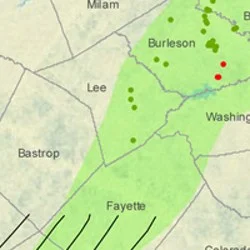
Lee County Eagle Ford Shale Map

Until recently, drilling activity in Lee County, TX has paled in comparison to other counties in the oil maturity window of the play, but now activity may begin picking up.

Austin-based Venado Oil & Gas has ramped up its operations in the county, and is seeing positive results. Other major companies with skin in the game in Lee County include EnerVest/EV Energy Partners, Apache and Clayton Williams. Depending on how well Venado does in the area may translate into increased activity from other players.

Eagle Ford Geology in Lee County

The geology of the Eagle Ford formation in Lee County has historically been less conducive to production when compared to Fayette, Gonzales, and DeWitt counties. In general, the formation is thinner and has a higher clay content than the more active areas of the play.

Venado's Lee County Eagle Ford Operations

In early April of 2014, Venado revealed new and improved fracture stimulation designs were yielding estimates of ultimate recovery (EUR) of more than 400,000 barrels of oil per well in the company's "Horseshoe Project" in Lee County. The company also completed in April the first “simulfracture” stimulation for the East Eagle Ford trend, whereby parallel horizontal wells were fracture stimulated simultaneously compared to single horizontal well completions.

“We are now hitting our stride in our East Eagle Ford project. We will be adding a second rig to the project this month to accelerate and capitalize upon our technical and operational improvements,” We are now hitting our stride in our East Eagle Ford project. We will be adding a second rig to the project this month to accelerate and capitalize upon our technical and operational improvements.”
— Venado CEO, Scott Garrick

Based on its Eagle Ford operations in the southern part of the trend, Venado believes simulfractured wells will provide a 15 percent to 25 percent increase to base case single well EURs. The locations of Venado's wells in Lee County are in and around Lincoln, TX.

Read more at vogllc.com

Natural Gas Production Soars in U.S.

EIA Dry Shale Gas Production

Natural gas production in the U.S. was the best it's ever been in April of 2014 according to estimates from Bentek Energy, an energy market analytics company based in Denver, CO. Production for the onshore Lower 48 last month averaged 67.3 Bcf/d, which was about .5 Bcf/d higher than March of 2014 production levels of 66.8 Bcf/d.

In 2014, Bentek predicts that average U.S. production for natural gas will be 67.5 Bcf/d, due in part to a higher overall price environment for producers and continued growth in liquids-rich plays like the Eagle Ford Shale and dry gas plays like the Marcellus Shale.  Currently, natural gas is trading at 4.53/mmbtu, which is a higher price point than some analysts expected due to the increased production volumes.

“Natural gas producers are enjoying a relatively robust price environment despite substantially increased output the past two months.”
— Jack Wiexel, Bentek director of energy analysis

espite the increase in production, the natural gas market is facing record low storage levels. While the EIA predicts storage build for the upcoming injection season (Apr - Oct) will be record breaking, total Lower 48 end-October inventories in 2014 would still be at their lowest level since 2008.

“U.S. consumers need the production levels seen in March and April to continue throughout the summer to avoid high prices in the winter.”
— Wiexel

Natural Gas Production in the Eagle Ford

Not surprisingly, gas to oil ratios (GOR) indicate there is a greater focus on oil in the Eagle Ford, but since significant activity began in 2009, there has also been a tremendous spike in natural gas production. According to the Energy Information Administration (EIA), gas production in the Eagle Ford accounted for nearly 4,000 MMcf/d in June of 2013, compared to only 5.8 MMcf/d in 2009. The Eagle Ford accounts for about 5% of total natural gas production in the onshore Lower 48.