EIA: Eagle Ford Shale Expected to Hit 1.614-Million b/d in Nov. 2014

EIA Eagle Ford Production Chart - Nov. 2014

The Eagle Ford Shale is expected to produce 1.614-million b/d of oil in November, which is a 29% increase from the same time last year, according to the Energy Information Administration's (EIA) Drilling Productivity Report. October's total production from the play is expected to be 1.579-million b/d.

Despite lower crude prices, EIA data shows gains in production across all major U.S. shale fields. According to the International Energy Agency (IEA), only 4% of U.S. shale production needs prices above $80 for drillers to break even. On October 17th, WTI was trading at ~$82.

Eagle Ford operators continue the trend to be more efficient. EIA data shows new-well oil production per rig increasing from 532 b/d in October to 540 b/d in November.

Gains in the Bakken and Permian Basin

The Bakken Shale in North Dakota and Montana is expected to produce 1.193-million b/d of oil in November, up 22% from the same time last year, according to the EIA. October's total production from the play is expected to be 1.164-million b/d.

Production in West Texas' Permian Basin in October is expected to be 7.765-million b/d, and increase ~2% to 1,807-million b/d in November.

Texas and North Dakota, which encompasses the most active area of the Bakken, currently make up almost half of the nation's crude oil supply.

Reliance Industries Seeks Buyer for Eagle Ford JV Interest

Pioneer Natural Resources' Production Chart

India's Reliance Industries is looking for a buyer for its interest in a three-way joint Eagle Ford joint venture, according to Bloomberg, which cited "people familiar with the matter." The other players in the JV are Irving, Texas-based Pioneer Natural Resources Co. and a division of Mexico's Alfa SAB de CV - Newpek, LLC.

Mumbai-based Reliance entered the Eagle Ford in 2010 for $1.15-billion. The deal included a 45% interest in Pioneer's Eagle Ford acreage. Currently, Pioneer has ~230,000 gross acres across the play, and a 46% interest in the JV. Newpek, LLC has a 9% interest.

Read more:Reliance - Pioneer - Newpek Joint Venture

The assets included in the JV are in the heart of the Eagle Ford's condensate window. In June, Pioneer garnered headlines when it received permission from the U.S. Commerce Department (U.S. DoC) to export minimally processed condensate to foreign buyers. With the green light from the U.S. DoC, the assets have become even more attractive and more valuable. Total assets are valued at ~$4 billion, according to Bloomberg's sources.

Read more: Pioneer CEO Confirms Condensate Exports to Europe

Earlier this year, Pioneer tabled a deal to sell its interest in the Eagle Ford JV, but will likely consider another offer if the price is right. Newpek, LLC is also reportedly looking for a buyer, according to Bloomberg.

In the second quarter, Pioneer posted record net production in the Eagle Ford of 47 mboe/d. Pioneer, which is the operator for the assets, expects to place 125 wells online in 2014.

Eagle Ford Shale Rig Count Increases by Two to 269

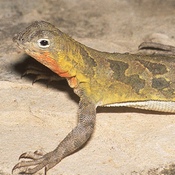
Spot Tailed Earless Lizard

The Eagle Ford Shale rig count increased by two to 269 rigs running across our coverage area by the end of last week.

In recent Eagle Ford news, a rare lizard, once spread across portions of the Eagle Ford region, has largely vanished, according to the San Antonio Express News. And now the species has the potential to disrupt oil & gas development in the region, if it is designated as threatened or endangered by the U.S. Fish & Wildlife Service (USFW), under the endangered species act (ESA).

Read more: Could a Lizard Disrupt Eagle Ford Development

The U.S. rig count increased by eight to 1,930 rigs running by the end of last week. A total of 320 rigs were targeting natural gas (ten less than the previous week) and 1,609 were targeting oil in the U.S. (18 more than the previous week). The remainder were drilling service wells (e.g. disposal wells, injection wells, etc.). 896 or ~48% of rigs active in the U.S. were running in Texas.

Baker Hughes rig count is quoted here. Baker Hughes also releases its own Eagle Ford Rig Count that covers the 14 core counties (210 rigs). The rig count published on EagleFordShale.com includes a 30 county area impacted by Eagle Ford development. A full list of the counties included can be found in the table near the bottom of this article.

Eagle Ford Oil & Gas Rigs

The natural gas rig count increased stayed flat at 16 rigs running by the end of last week. Average rig counts for natural gas production in 2012 were around 80 and then dropped to around 40 in 2013. Natural gas prices decreased by ~$.15 from the previous week to $3.86/mmbtu on Friday afternoon.

The oil rig count increased by two to 253 rigs running by the end of last week. WTI oil prices decreased by more than $5.00 from the previous week, trading at $84.72/bbl on Friday afternoon. Eagle Ford light crude traded at $82.25/bbl on Oct. 9th.

A total of 243 rigs are drilling horizontal wells, ten rigs are drilling directional wells, and 16 rigs are drilling vertical wells. Karnes, La Salle, Dimmit, and McMullen each have at minimum 25 rigs running. Karnes County has the highest rig count this week at 38. See the full list below in the Eagle Ford Shale Drilling by County below

South Texas Oil & Gas News:

Be sure to visit our South Texas Oilfield Job Listings to search openings and come back weekly for updates.

Eagle Ford Shale Drilling by County

What is the Rig Count?

The Eagle Ford Shale Rig Count is an index of the total number of oil & gas drilling rigs running across a 30 county area in South Texas. The South Texas rigs referred to in this article are for ALL drilling reported by Baker Hughes and not solely wells targeting the Eagle Ford formation. All land rigs and onshore rig data shown here are based upon industry estimates provided by the Baker Hughes Rig Count.

PetroQuest Sells Eagle Ford Assets - $9.7 Million

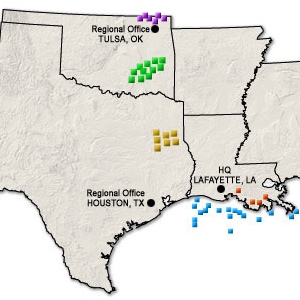
PetroQuest, Inc. Operations Map

PetroQuest Energy, Inc. (NYSE: PQ) announced the completion of its Eagle Ford assets sale at the end of September, 2014. The Houston, TX-based company netted $9.7 million from the deal.

PetroQuest estimates the operating cash flow generated from its Eagle Ford assets during the first six months of 2014 totaled ~$2-million on average with daily production of ~195 boe/d. At the end of June, the company estimated proven natural gas reserves associated with the assets totaled approximately 2.1 Bcfe, with an estimated discounted net cash flow (PV-10*) of $6.6-million.

Overall, this sale a good deal for PetroQuest, considering the purchase price was nearly 50% higher than PV-10. The company did not disclose the buyer for the assets.

PetroQuest will likely re-invest the proceeds from this sale in another Texas play. The company's core focus areas are in the Woodford, Cotton Valley and the Gulf Coast.

PV-10: present value of estimated future oil and gas revenues, net of estimated direct expenses, discounted at an annual discount rate of 10%.

Read more at petroquest.com

Could a Lizard Disrupt Eagle Ford Development?

Spot Tailed Earless Lizard

Have you ever heard of the spot-tailed earless lizard? Don't worry - we hadn't either.

The rare lizard, once spread across portions of the Eagle Ford region, has largely vanished, the San Antonio Express News reported in early October of 2014. And now the species has the potential to disprupt oil & gas development in the region, if it is designated as threatened or endangered by the U.S. Fish & Wildlife Service (USFW), under the endangered species act (ESA).

Endangered and Threatened Species in Texas

Industry and regulators fear government intrusion via the ESA could ultimately hurt Texas' lucrative oil & gas industry. And those fears are not unwarranted - in 2012, a $29-million road construction project in San Antonio, TX, was stopped, when it was discovered the endangered Bracken Bat Cave Meshweaver spider's cave habitat would be disrupted. Construction is slated to begin again in 2015, but with a new price tag of $44-million to accommodate for the spider.

In late March of 2014, the USFW listed the lesser praire chicken as threatened under the ESA. The species is concentrated in the western portion of the state and in the Panhandle, which presents more of a threat to oil & gas operations in the Permian Basin, than the Eagle Ford region. However, several species, including the spot-tailed earless lizard, have the potential to impact the Eagle Ford.

Read more: The Lesser Praire Chicken's Impact on Texas Oil

Environmental Group Pushing for Lizard's Protection Under ESA

Santa Fe, NM-based WildEarth Guardians, an environmental group, submitted a petition in 2010 to place the spot-tailed earless lizard under the endangered species act. In their petition, the group says the species may already be extinct in the wild. In 2011, USFW said listing the species as endangered or threatened may be warranted, but that doesn't mean the lizard will ultimately receive either of those designations. The process can take years for a species to receive a designation from the USFW.

The Texas Railroad Commission (RRC), which regulates the oil & gas industry in Texas, has taken a strong stance against the federal government and the ESA.

“we must not allow the Obama administration to use the Endangered Species Act as a weapon against the oil and gas industry.”
— Commissioner David Porter

If or when the lizard receives an endangered or threatened designation from the USFW, oil & gas development would be impacted in the Eagle Ford. With the play hitting 1.5 million b/d in September of 2014, this has the potential to be a notable issue for South Texas' burgeoning oil and gas economy.